
Present a Measured Baseline and Result to the Steering Committee
Pyze gives a transformation programme a measured baseline, a ranked blueprint and a defensible result, so decisions rest on measurement.
Structural facts about the method. Outcomes vary by process and by how much of the work already sits in a system of record.
Transformation leaders are caught between an executive team that wants a number and an operation that cannot produce one. The usual response is a model, and a model is difficult to defend when the source of its inputs is questioned. Measuring the current state first gives those inputs a documented source.
Questions Asked of This Role
A mandate to show AI impact this year against a baseline that was not captured
Competing internal estimates of the same opportunity that differ by multiples
Pilots that succeed and then fail to scale, with no diagnosis of why
A steering committee that has stopped believing modelled benefit cases
Key Questions and Outcomes
Each question shows the answer available today, why that answer is insufficient, and what changes with Pyze.
What is the size of the prize?
A model built on assumptions from a benchmark deck.
Benchmarks describe other organisations. Applied to yours they produce a number that is precise but unverifiable, which reduces credibility.
A measured figure from your own operation, with the method visible so anyone who doubts it can follow it back to the observation.
Why did the pilot not scale?
A retrospective and a view that adoption was the problem.
Pilots frequently succeed because of conditions that do not survive scale: a motivated team, a clean subset of cases, close support. None of that is recorded, so the diagnosis is guesswork.
The pilot cohort and the wider population measured with the same method, which turns the difference into a described gap rather than a theory.
Which of our five workstreams is working?
Self-reported progress from each workstream lead.
Each is measured differently and each has an incentive to report well. The portfolio view is a sum of incomparable numbers.
One measurement method across all of them, so the comparison is between like and like and the portfolio view means something.
Engagement Sequence
Baseline the process you intend to change, before you change it. Programmes that skip this step cannot recover the baseline later.
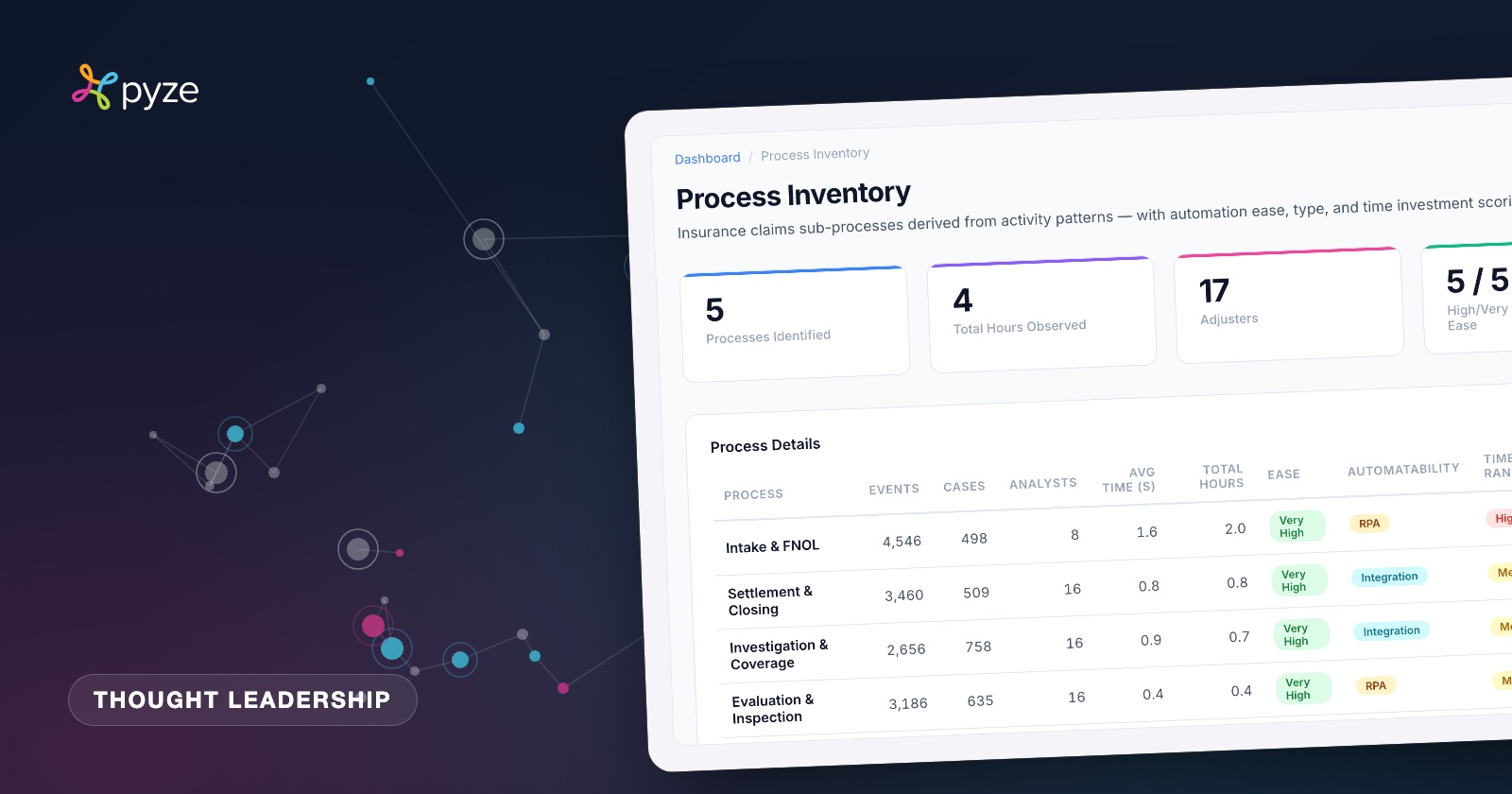
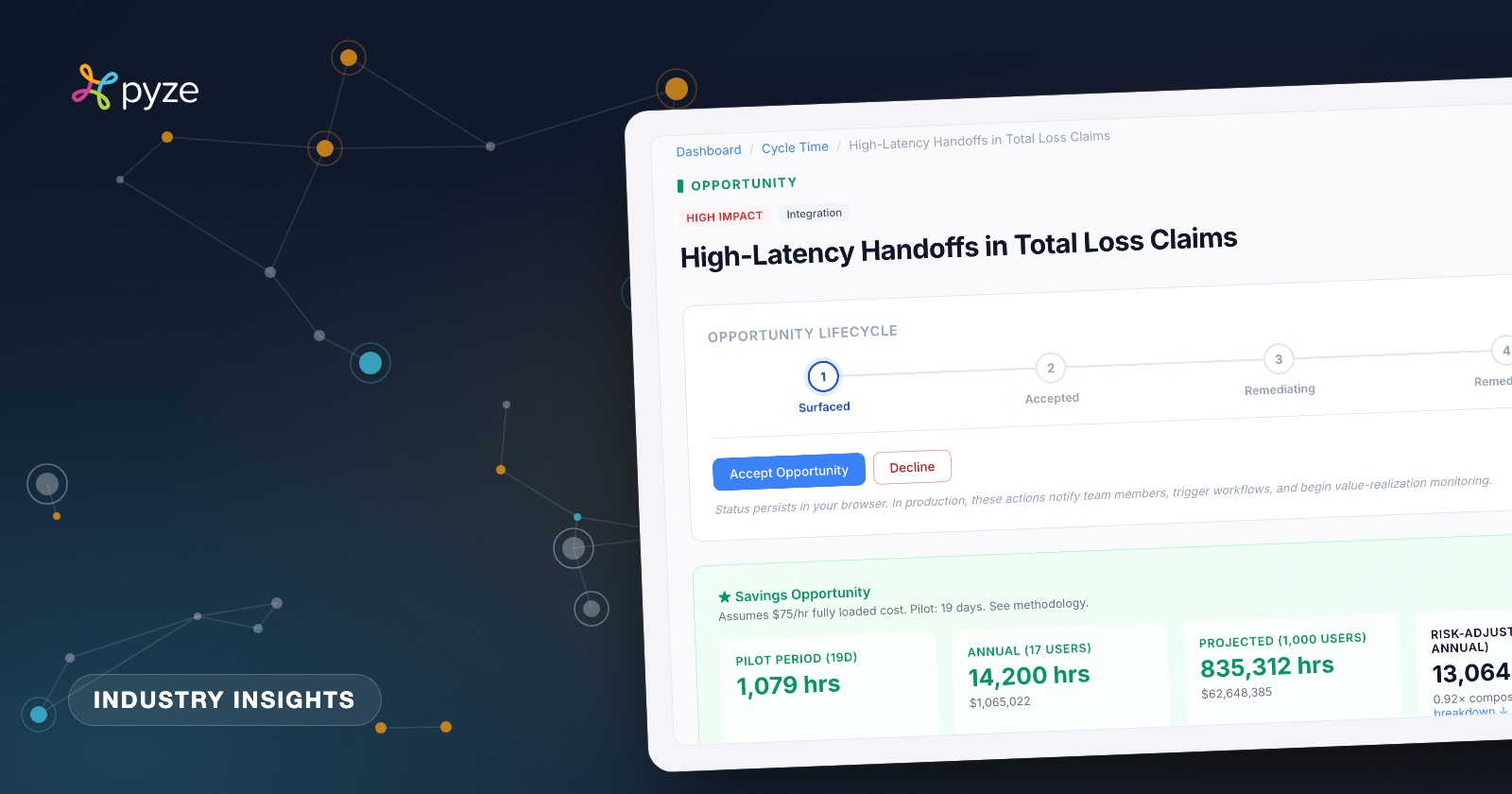
A ranked, priced blueprint across five levers, so the portfolio is sequenced on evidence.
Re-measure. The steering committee sees measured movement rather than intention.
Frequently Asked Questions
We have already started. Is it too late? +
No, but there is a limitation. Without a pre-change baseline the before side is reconstructed rather than measured, and it should be labelled that way in any claim. Starting now still gives you a real baseline for everything that comes after.
Is every opportunity an agent? +
No. A method that identifies agents for every opportunity is not measuring. Four of the five levers are not agents. Standardising a procedure or rebalancing a workload is frequently the faster and cheaper answer.
How do we ensure the results are used in daily operations? +
By tying it to a decision. A baseline that does not change what is funded next quarter has little value, so the output is a priced, ranked blueprint rather than a reporting layer.