
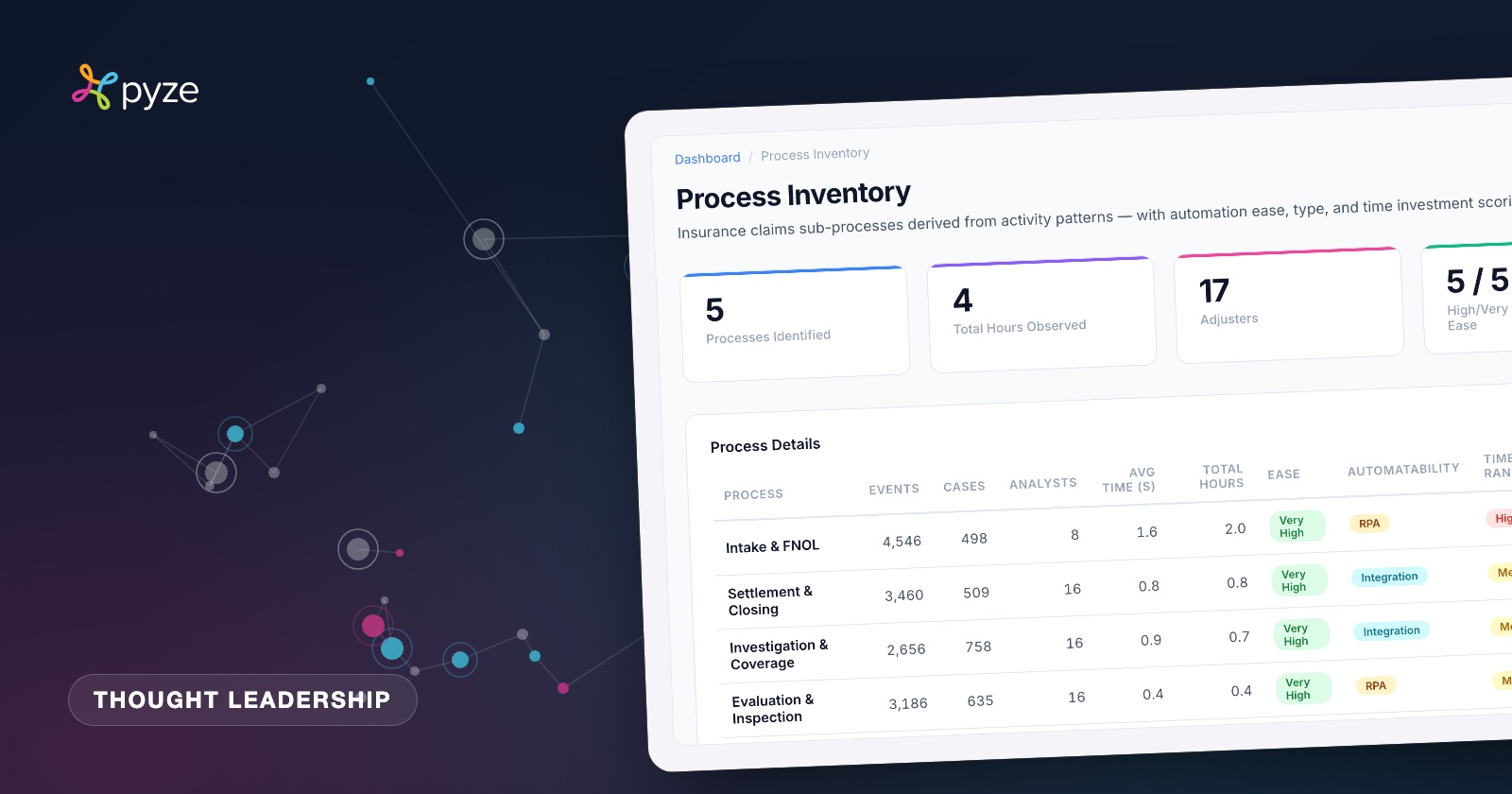
Many assessments end as a presentation. A few teams are interviewed, a model is built, and a number is presented that cannot be traced to underlying data. A year later it is not possible to say whether the number was correct, because nothing was measured on the same terms afterward.
A baseline is measured on the work as it happens, across the whole population in scope, and each figure points back to observed execution. This makes the baseline defensible and makes a later comparison possible.
This post describes the engagement in practice. The timing is representative and adapts to readiness.
The Six-Week Schedule
| When | Phase | What happens |
|---|---|---|
| Pre-work, 1 to 2 weeks | Align and prepare | Confirm process scope, identify user cohorts, collect SOPs and any existing blueprint, align KPIs and readiness |
| Week 1 | Mobilize | Kick off with stakeholders, configure collection, validate with 2 to 3 users, lock the measurement framework |
| Weeks 2 to 3 | Observe | Collect activity, build the human effort baseline, map SOPs and score conformance, share initial findings |
| Weeks 3 to 5 | Analyze | Deep-dive analysis, human and agent assessment, opportunity sizing, validation with subject matter experts |
| Week 6 | Assess | Executive assessment, baseline and realized value, recommendations, next priorities |
The six weeks cover measurement and the executive assessment. The ranked and priced blueprint is a further step of roughly two weeks, as the FAQ sets out, and the timing flexes with readiness. Two phases deserve attention. Validating with two or three users in week one identifies configuration problems while they are inexpensive to fix. The subject matter expert validation in weeks three to five tests findings against operational reality: an opportunity that experts cannot recognize is either incorrect or poorly explained, and either outcome is better discovered early.
Prerequisites
Four enablers determine whether the schedule holds: technical readiness, process and SOP coverage, user cohort mobilization, and agreed KPIs with success criteria.
None of these is analysis. The schedule risk usually comes from approvals and access rather than from interpreting the data, which is the reason the pre-work phase exists. Teams that treat it as optional tend to lose the time they expected to save.
The data collection is limited in scope. It captures interaction metadata from an agreed list of business applications, runs while people do their normal work, and does not change how they work. A measurement that alters the behavior it measures is unreliable.
Deliverables
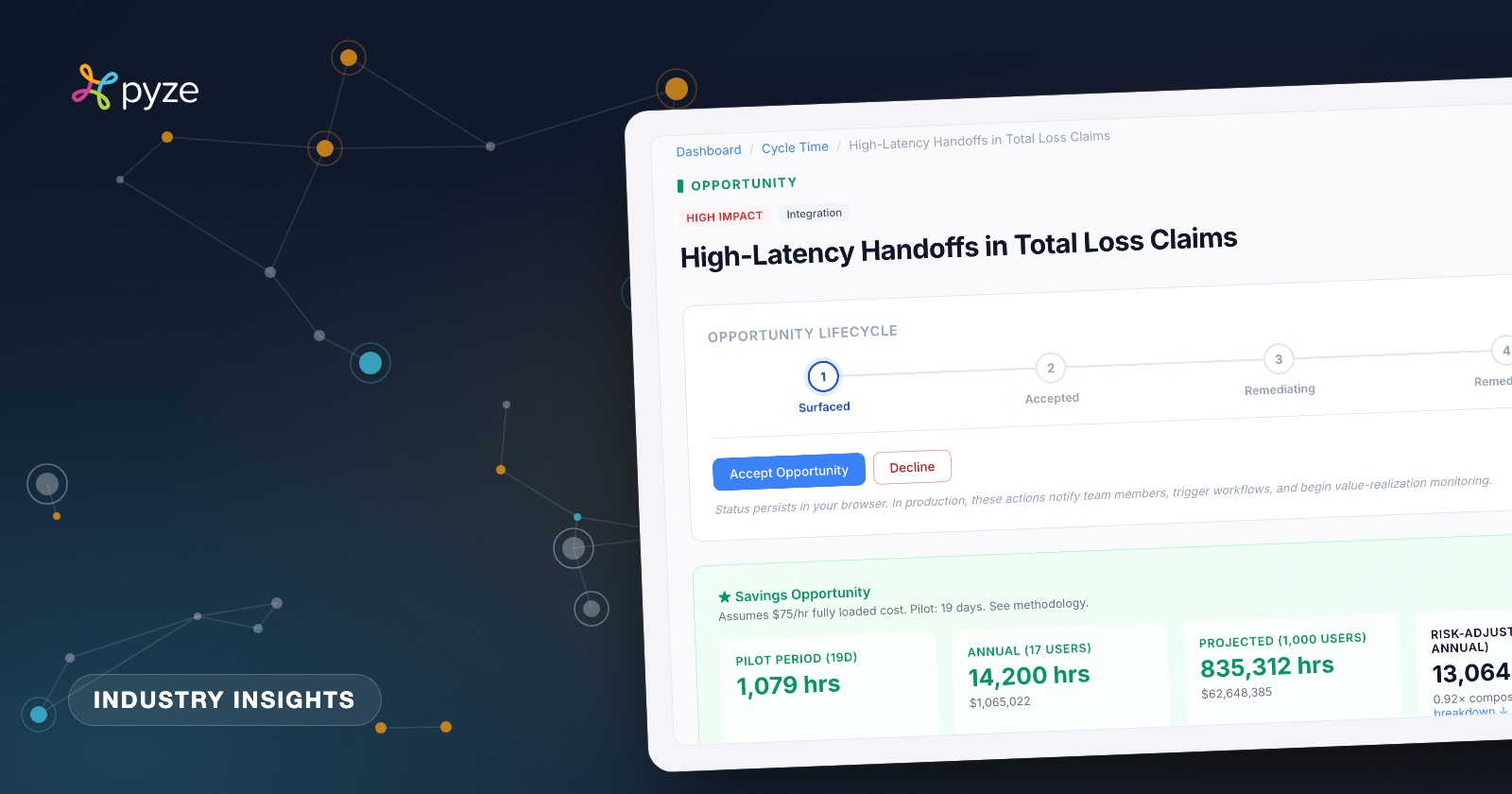
Each opportunity arrives with the evidence behind it, an estimate of what could be recovered, and a status that moves through four stages: surfaced, accepted, remediating and remediated.

The lifecycle turns findings into an agenda. Someone accepts or declines each one, and accepted items continue into remediation with value monitored against the baseline. Opportunities that cannot be evidenced are listed as open questions and are not included in a total.
A baseline reconstructed after the fact is an estimate and cannot serve as a measurement, which is why it is captured before the change.
After the Six Weeks
The assessment is the first iteration of a measurement loop. Once a change lands, whether it is an agent, an automation or a redesigned process, a post-transformation checkpoint repeats the measurement: re-measure, compare, quantify, then optimize. It is timed to the deployment and to a sufficient adoption period, because measuring in the week an agent goes live provides little information.
There are two entry points. If agents or automation are already in production, the first engagement independently measures what changed and what manual effort remains. If the transformation has not happened yet, the engagement baselines the before state and uses the same evidence layer to quantify impact afterward. In both cases the same measurement is used before and after.
Where to Go Next
- Read why the before has to be measured first in methodology and in Systems, People, Action.
- Check the FAQ for what we need from your team and what we collect.
- Or schedule a demo and we will scope a first process with you.