
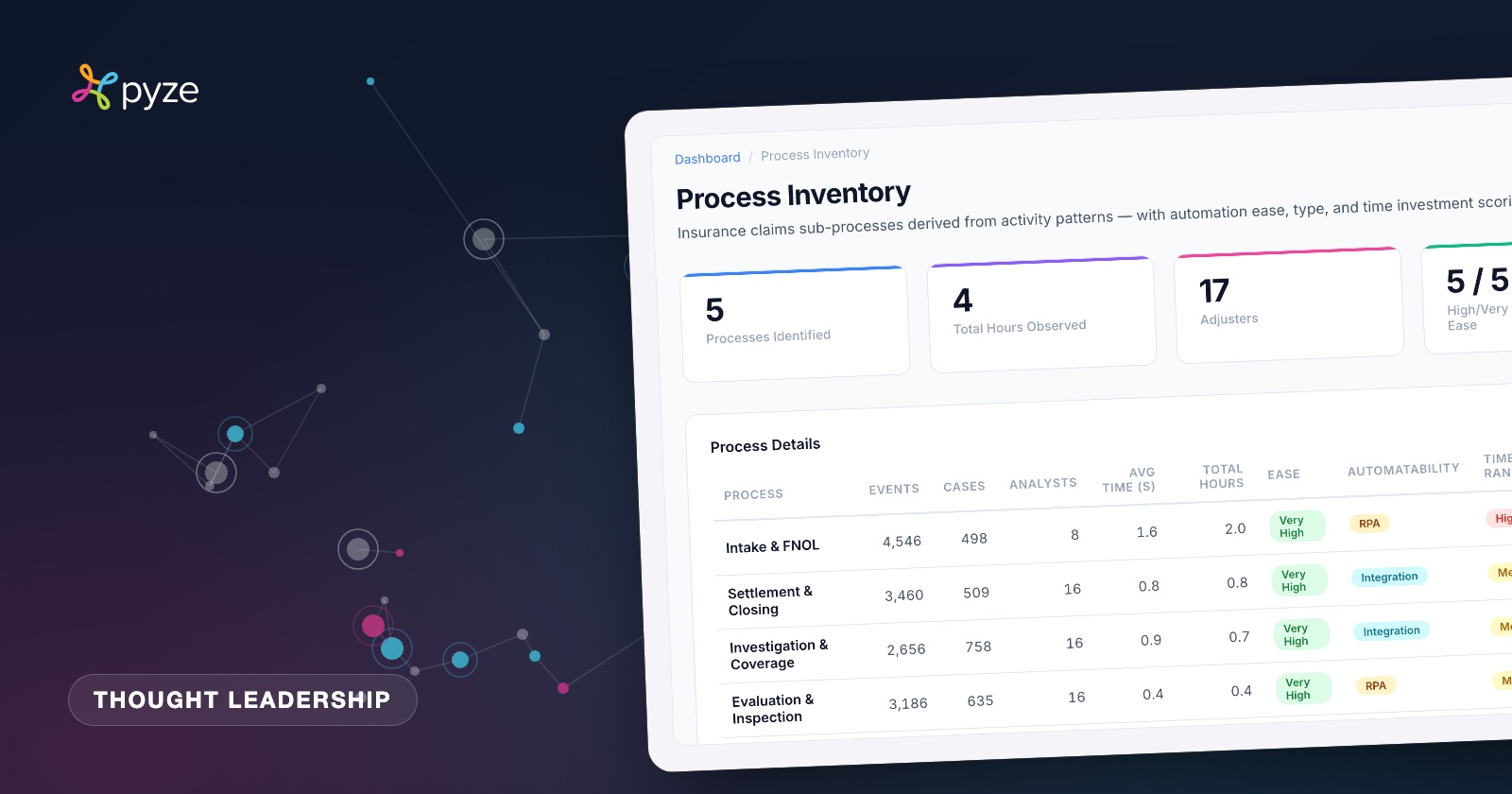
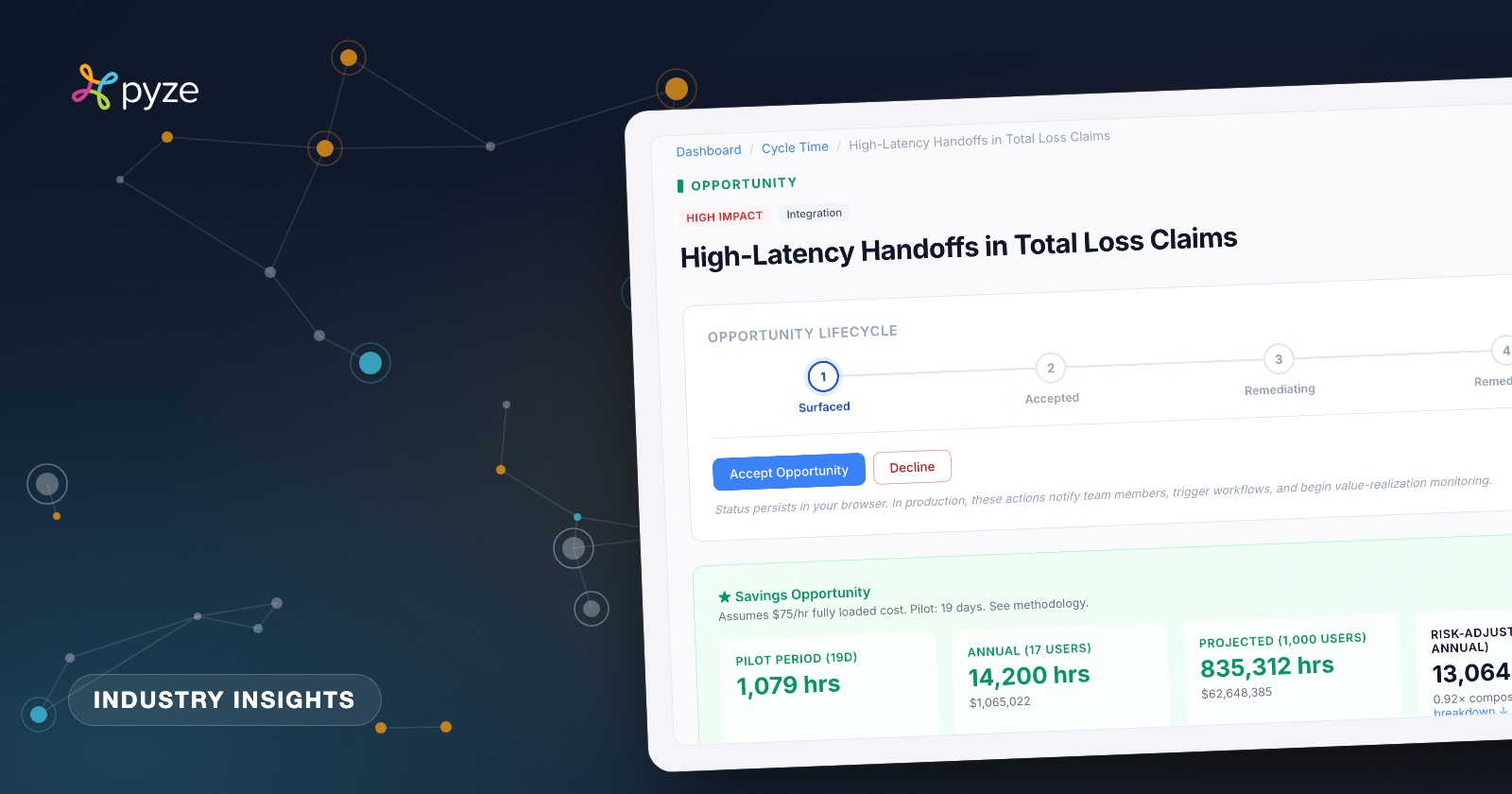
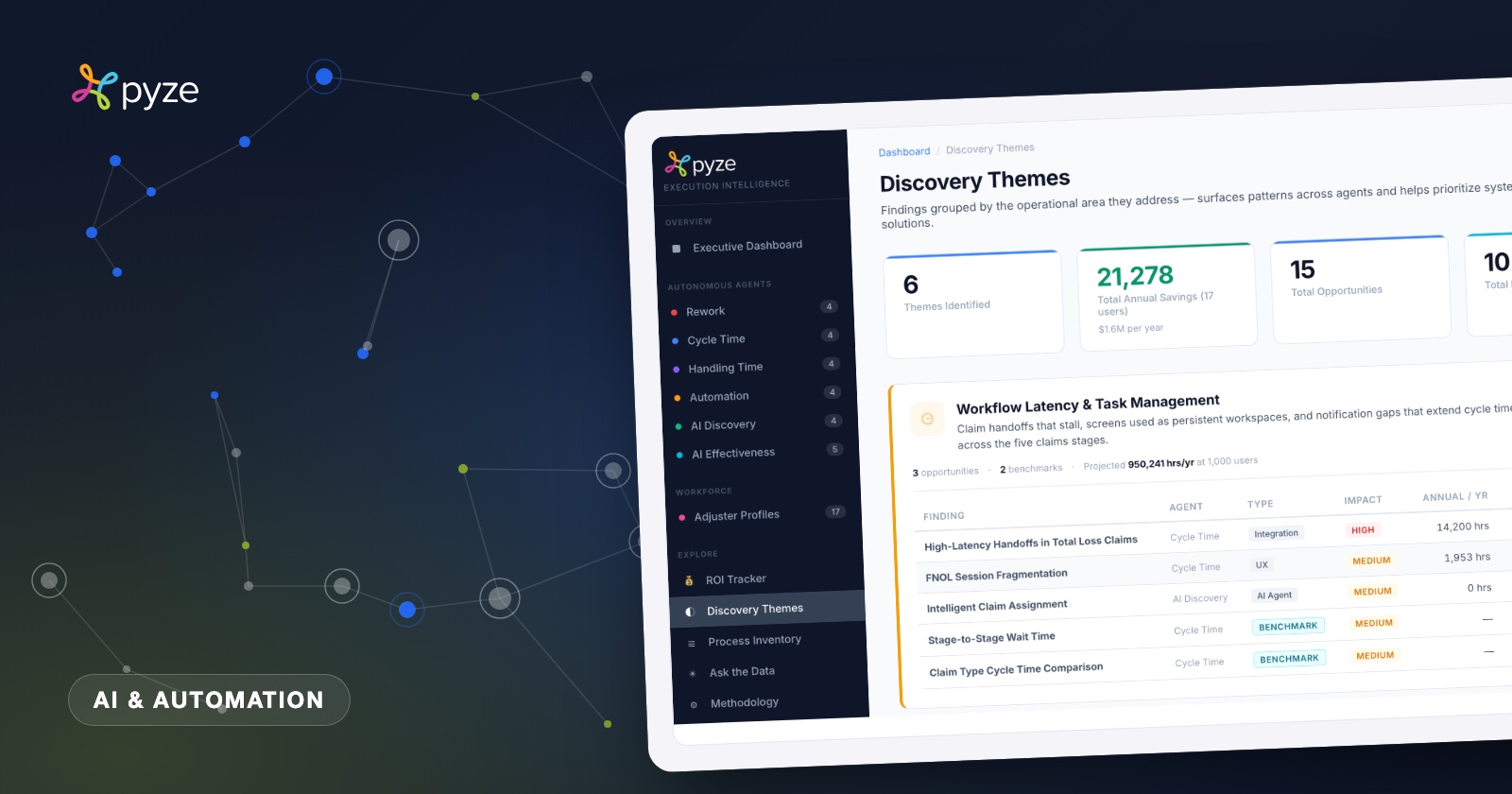
Deploying a copilot on a task that a rule could perform adds the cost of judgment that the task does not need. Deploying a script on a task that requires judgment results in failures at the first exception. Both errors come from treating “use AI” as a single decision.
It is at least two decisions, and the evidence for each is different.
Two Kinds of Work
Automation suits work that is repetitive and deterministic. The sequence of steps is the same every time, the decision has clear inputs and outputs, and the pattern is frequent with little variation. Scripted automation or RPA is usually the right tool, and it is cheaper and easier to audit than anything involving a model.
Augmentation suits work that needs judgment. Drafting, classification, coding and research fall into this group, where the inputs vary and a person should remain in the loop for quality and compliance. This is where copilots and language-model agents are most useful.
From the outside the two kinds of work look similar, since both are manual work in an application. The difference only becomes visible when the work is examined across many people and many cases.
Scoring From Execution Data
Each candidate task receives a score from 0 to 100, computed from observed execution patterns rather than from a workshop. Four weighted factors go into it:
| Factor | Weight | What it asks |
|---|---|---|
| Pattern frequency | 30% | How often the pattern occurs across the workforce |
| Decision complexity | 30% | How much judgment is needed versus rules |
| Data structure | 20% | Structured inputs, or unstructured documents |
| Cross-app scope | 20% | How many systems the task spans |
The process has four steps. Mine the execution data for patterns, score each for automation versus augmentation fit, quantify a risk-adjusted impact, and recommend with the rationale attached. A high score is a ranked candidate with the evidence a reviewer needs to agree or push back, and is not an instruction to proceed.

The relevant question for each candidate is whether the work around the task is stable enough to justify automating it.
Measuring the Result
Selecting well is half the job. The other half is determining whether the change worked, and this is where most organizations are weakest. Adoption is usually reported by survey or by license count, which shows who says they use the tool but not what changed in the work.
A more reliable comparison is between people who adopted the tool and people who did not, on the same work, measured from execution. Throughput per day, time to completion, rework and workflow changes after adoption all come from what happened in the application. The cohort view also shows where the investment is not delivering. In the demo environment below, the same copilot is a daily tool for some users and is used very little by others.
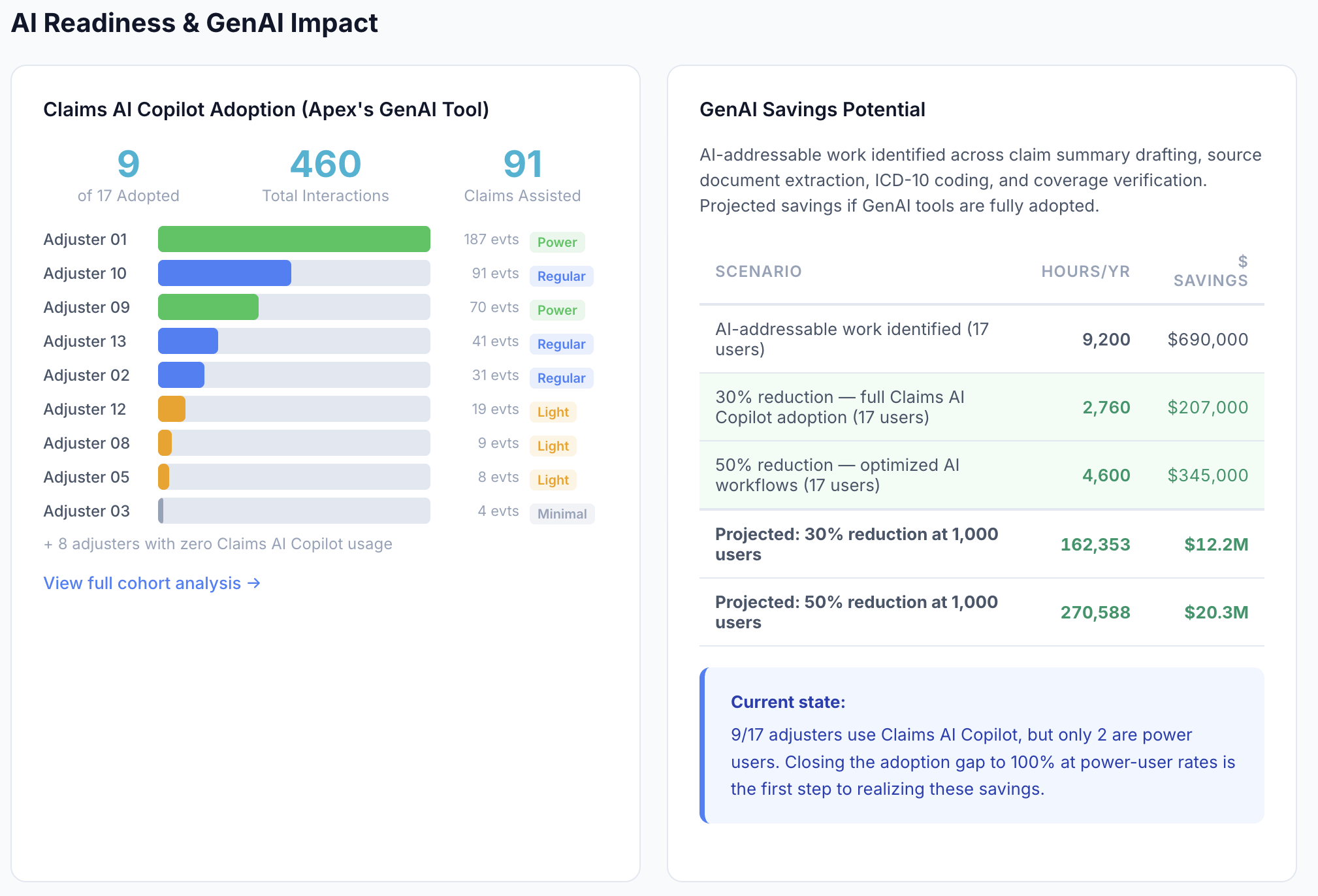
This gap is a finding in itself. It points to a need for training, to a tool that does not fit the task, or to a task that did not need a copilot.
Three Functions on One Baseline
The work is divided into three functions, each handled by a different agent in the platform. Discovery scans the baseline for waste and friction and surfaces ranked automate-or-augment opportunities. SOP generation turns observed work into standard operating procedures and monitors them for drift. Effectiveness measures adoption, speed, accuracy and cost before, during and after deployment.
The three functions share one baseline, which makes the before and after comparable. Pyze does not build or run your agents. It identifies where they belong and measures whether they paid back.
Where to Go Next
- Explore AI Discovery and Effectiveness, the two products behind this approach.
- See how findings turn into owned actions with Autonomous Agents.
- Read how to sequence the resulting work in Sequencing Rebalancing, Standardization, Automation and Agents.