
In a typical customer service stack, a call arrives in a telephony platform such as Five9, an intent is registered, and the agent opens a case in a CRM such as Salesforce. Each system keeps an accurate record of its own part of the interaction, and neither records the rest.
The telephony system knows why the customer called, which queue received the call, how long they waited and talked, and which disposition the agent selected. It does not know what the agent did next. The CRM knows a case was created, how it was classified and when it closed. It does not know about the minutes of searching before the first field was filled in.
The Work Between the Two Records
What sits between those two records is where handle time is determined: switching between platforms, searching a knowledge base, checking a spreadsheet, opening a billing or order lookup, and asking a colleague. Neither system logs this activity, because none of it is a transaction.
This matters most when one of the platforms is being replaced. A new design built from two systems that each observe half the interaction will inherit the gap between them. Teams reproduce the same swivel-chair pattern on a newer screen, and the dashboard still shows the same handle time.
What It Takes to See the Gap
The first requirement is a single capture layer across the agent desktop that does not change how agents work. Pyze records interaction metadata only: which application, which screen, and the sequence and timing of actions. Capture is limited to an explicit whitelist of business applications. It never records keystrokes, field values, free text or screen contents, and user identifiers are pseudonymous. This allows the same deployment to meet privacy and works-council review, onshore and offshore.
The second requirement is the configuration of the platforms themselves. Much of how a CRM or telephony system is meant to behave is declarative and machine-readable, so it can be extracted instead of reconstructed in workshops:
- Assignment and escalation rules that decide where a case goes and when it ages.
- Validation rules that decide what the platform prevents.
- Existing automation in flows and workflows.
- Routing and queue capacity, and the entitlements that set the service clock.
- Call flows, intent and disposition taxonomies, and skill-based routing on the telephony side.
Combined, the three sources answer different questions. The telephony configuration states what the customer asked for. The CRM configuration states what should have happened. The execution data states what did happen.

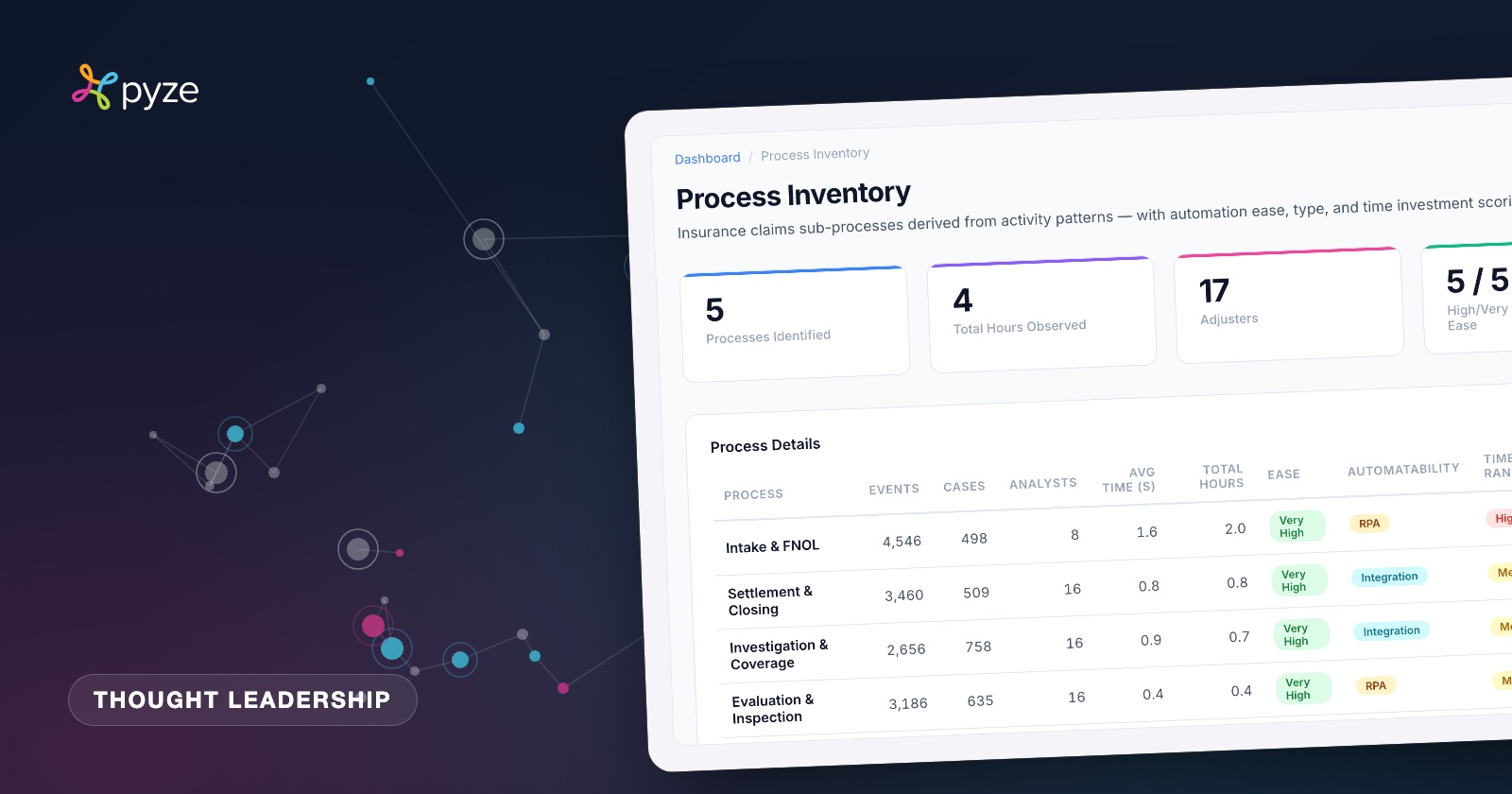
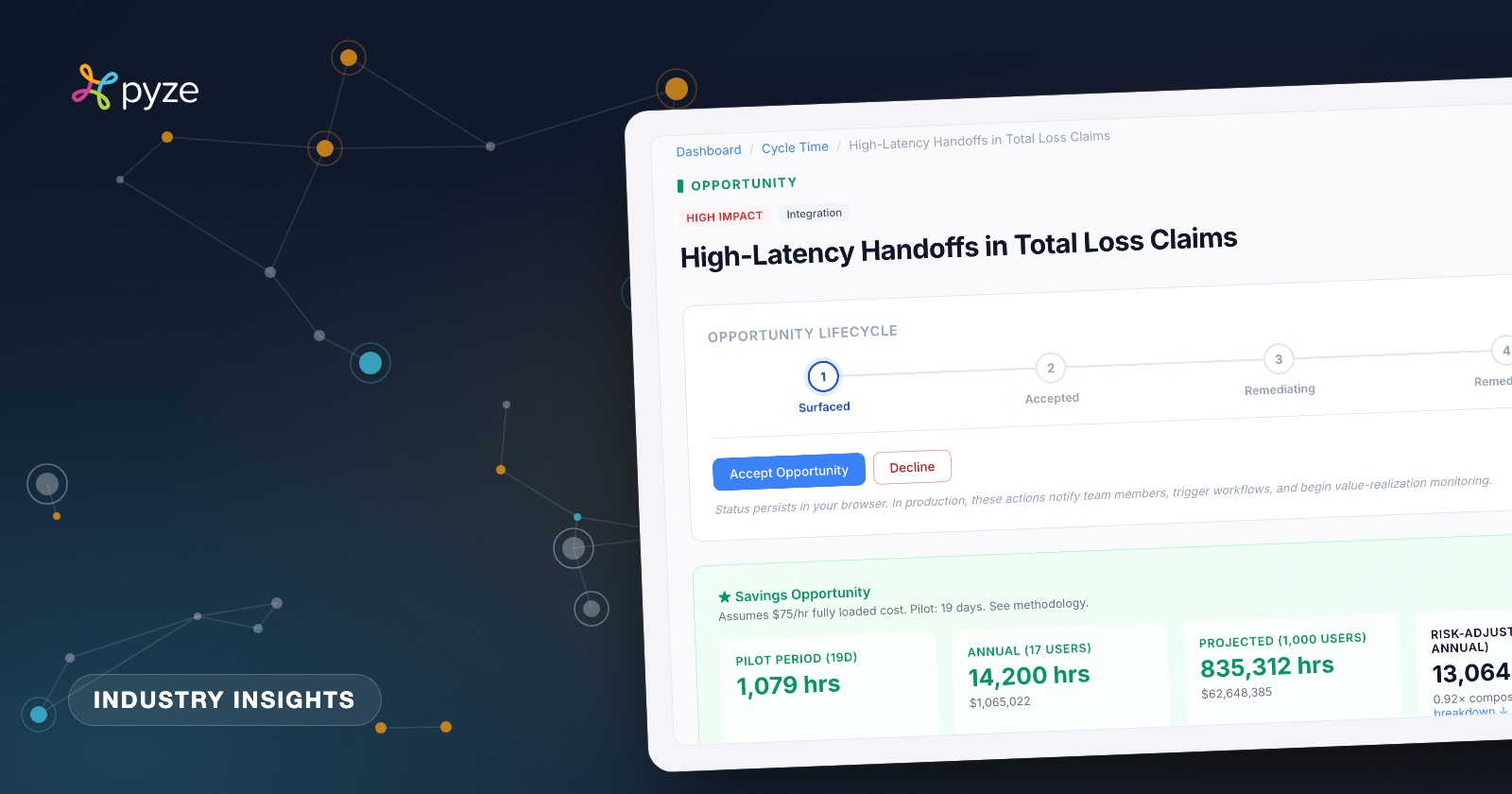
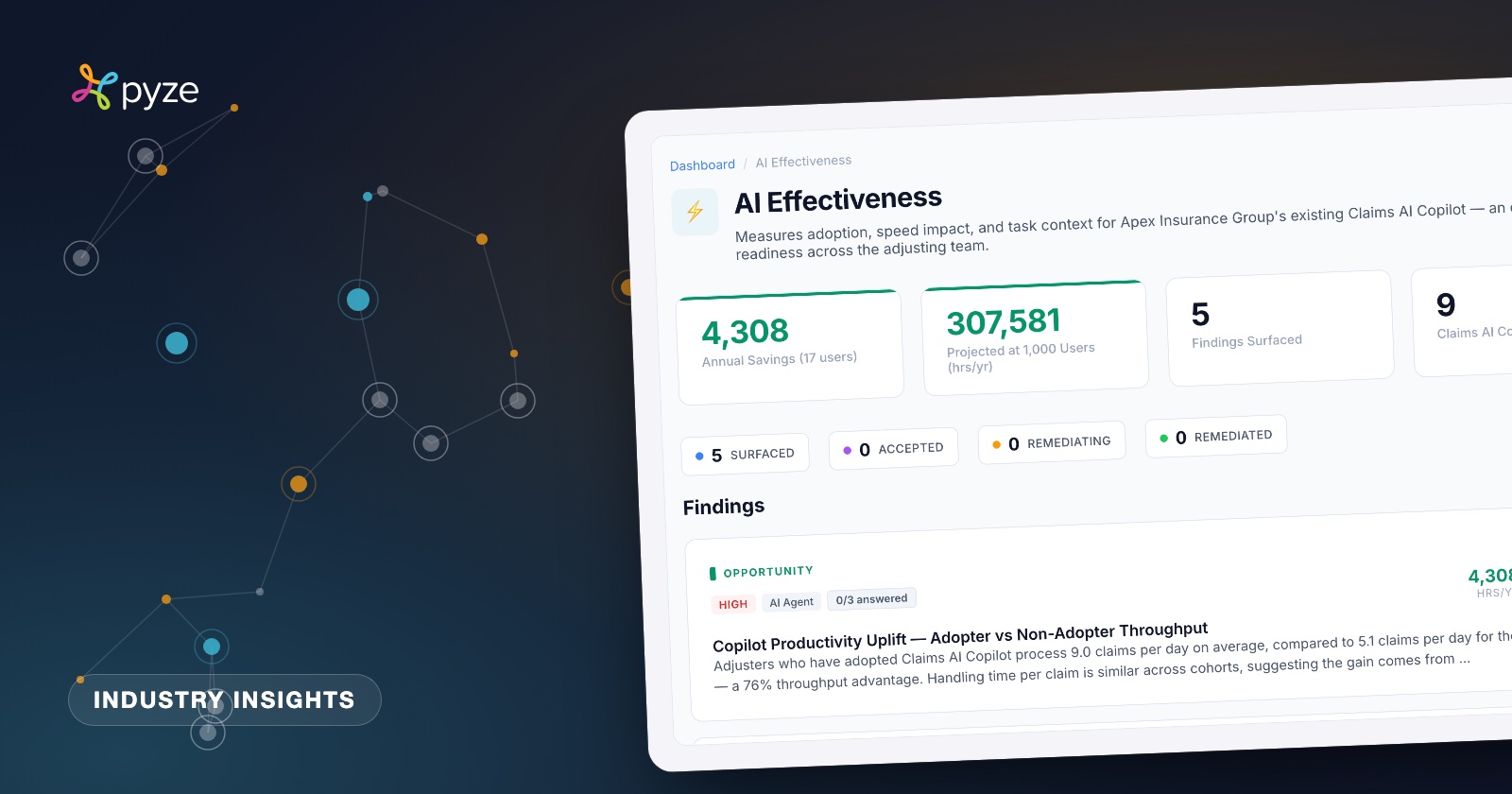
The screen above is from the Pyze demo environment and shows a claims example instead of a contact center, but the approach is the same. The finding is a wait that no system of record reports, measured from the work itself, with the supporting evidence and a lifecycle that tracks it from surfaced to remediated.
Questions the New Platform Must Answer
A modernization is evaluated on whether the new platform performs better than the old one. That comes down to four questions, each answered against a baseline captured before anything changed:
- Is it used? Continued use of the previous path is the earliest sign that a design decision was wrong.
- Is it faster? Measure handle time by intent and case type, with case mix controlled instead of averaged across a changing population.
- Is it used as designed? Where it is not, either the design or the behavior needs to change.
- Where did the capacity go? If agents or automation absorbed work, what returned to a person, and where did the released time go? Capacity that cannot be located was not released.
None of these can be answered from the two systems alone, and none can be answered retroactively. The baseline has to exist before design decisions are finalized.
Where to Go Next
- Learn how Productivity Intelligence baselines work across applications, inside and outside the system of record.
- Read why the baseline has to come first: Why Modernization Programs Struggle to Prove Results.
- See what we collect and what we never collect on the security page and in the FAQ, or book a demo.