
Transportation and Logistics: Supply Chain and Planning
Network and capacity planning in logistics covers demand forecasting by lane, carrier capacity allocation, route and load planning, and mid-week replanning when volumes shift. Planners assemble data from the TMS, warehouse systems and spreadsheet models, then circulate plan changes to dispatch and carrier managers by email and chat. Much of the effort goes to consolidating forecast inputs and reconciling plan versions.
Supply Chain and Planning in Transportation and Logistics
Network and capacity planning in logistics covers demand forecasting by lane, carrier capacity allocation, route and load planning, and mid-week replanning when volumes shift. Planners assemble data from the TMS, warehouse systems and spreadsheet models, then circulate plan changes to dispatch and carrier managers by email and chat. Much of the effort goes to consolidating forecast inputs and reconciling plan versions.
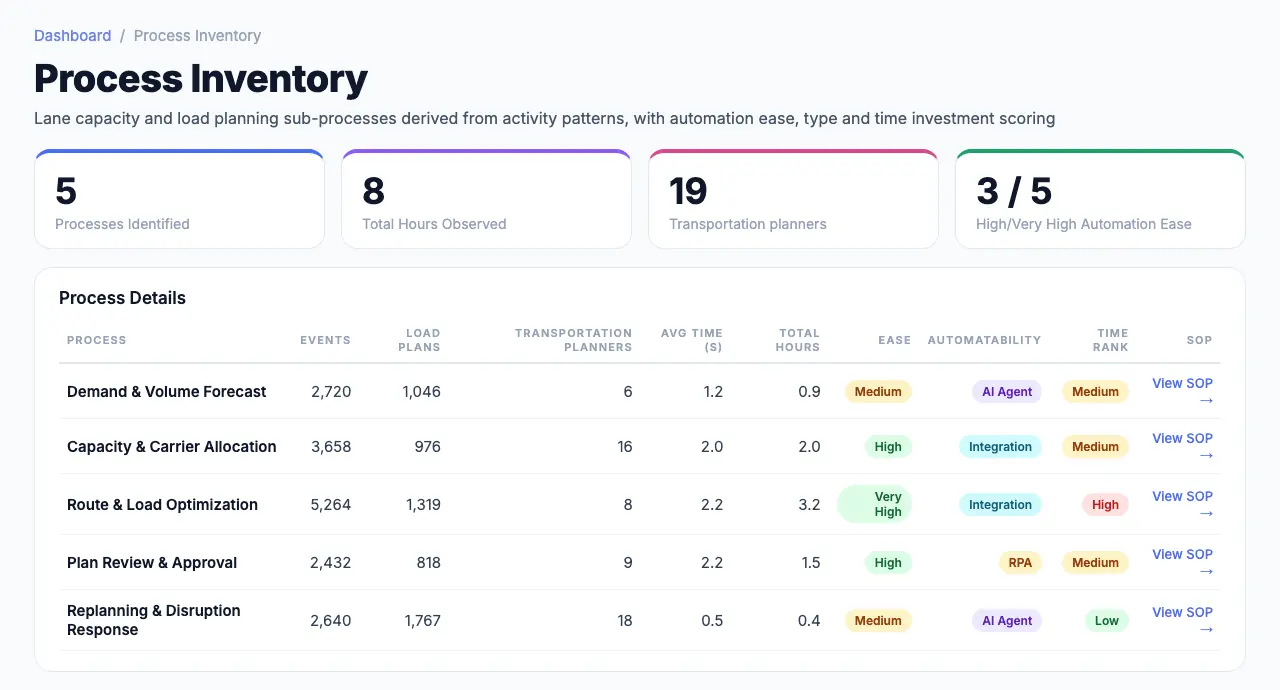
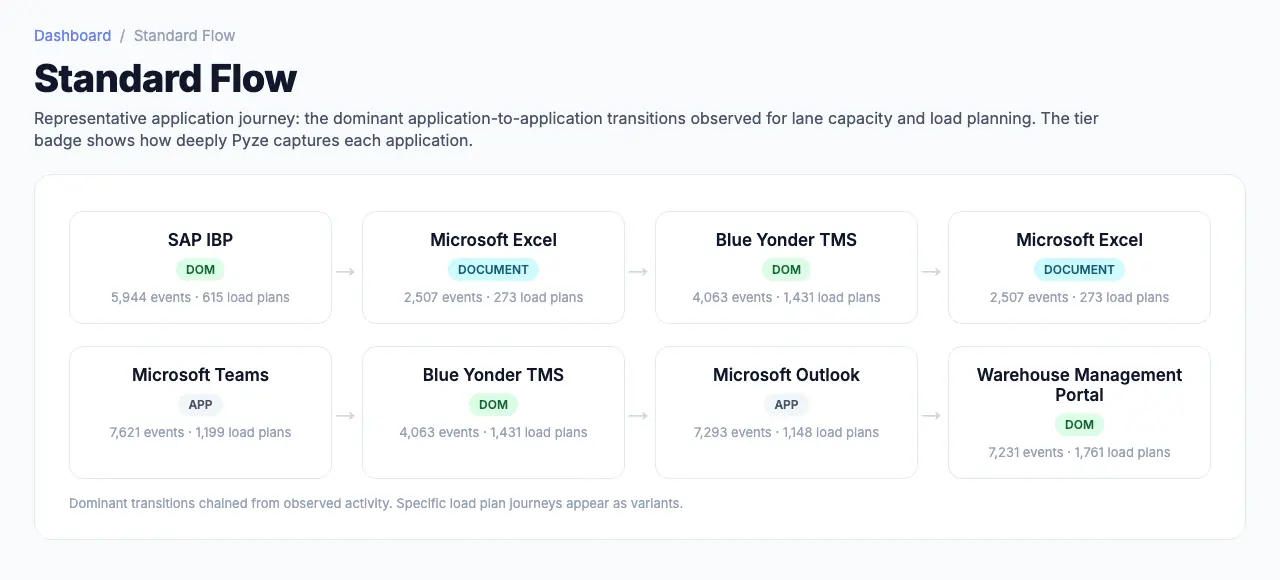
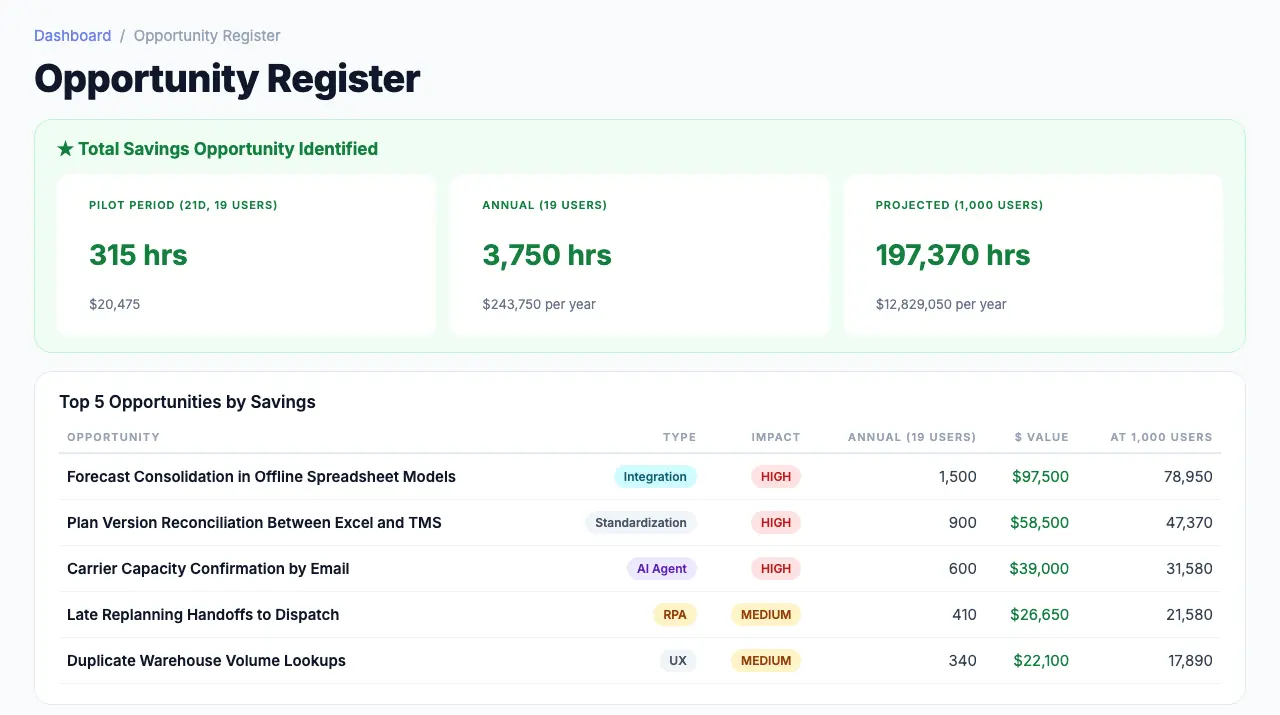
Example product views. Figures shown are illustrative.
What Pyze Measures
- Elapsed and hands-on time per planning stage
- Time spent moving data between planning tools and spreadsheets
- Replanning loops triggered by capacity and volume changes
- Variation in planning paths across regions and planners
Typical Findings
- Forecast inputs are exported from the planning system into spreadsheets and combined by hand before every capacity review.
- Plan changes are communicated to dispatch through chat and email, so the TMS record trails the plan that dispatchers are actually working from.
- Carrier capacity commitments are collected through individual email exchanges and then keyed into allocation tables.
What the Opportunity Register Supports
- The opportunity register supports connecting forecast sources to the planning model without spreadsheet staging.
- The measured replanning paths quantify how much planner time is consumed by communicating plan changes.
- The register supports a single plan of record shared by planning and dispatch.
Example Opportunities
- 1.Forecast Consolidation in Offline Spreadsheet Models Integration Automate
- 2.Plan Version Reconciliation Between Excel and TMS Standardization Standardize
- 3.Carrier Capacity Confirmation by Email AI Agent Agentify
- 4.Late Replanning Handoffs to Dispatch RPA Rebalance
- 5.Duplicate Warehouse Volume Lookups UX Simplify
Roles and Titles
- Chief Operating Officer
- Head of Supply Chain
VP Supply Chain, SVP Supply Chain, Chief Supply Chain Officer
Supply Chain and Planning in Other Industries
Other Transportation and Logistics Functions
See This on Your Own Work
A measured baseline before anything changes, then a priced and owned list of what to do about the gaps.