
Fintech and Payments: KYC and Financial Crime
KYC and financial crime teams review merchant and customer profiles, screen parties against sanctions and watchlists, and investigate transaction monitoring alerts. Investigators work across the case management platform, screening tools, the core processing system and external registries, then document the rationale for each disposition. Time is spent gathering evidence from separate systems and drafting narratives for regulatory filings.
KYC and Financial Crime in Fintech and Payments
KYC and financial crime teams review merchant and customer profiles, screen parties against sanctions and watchlists, and investigate transaction monitoring alerts. Investigators work across the case management platform, screening tools, the core processing system and external registries, then document the rationale for each disposition. Time is spent gathering evidence from separate systems and drafting narratives for regulatory filings.
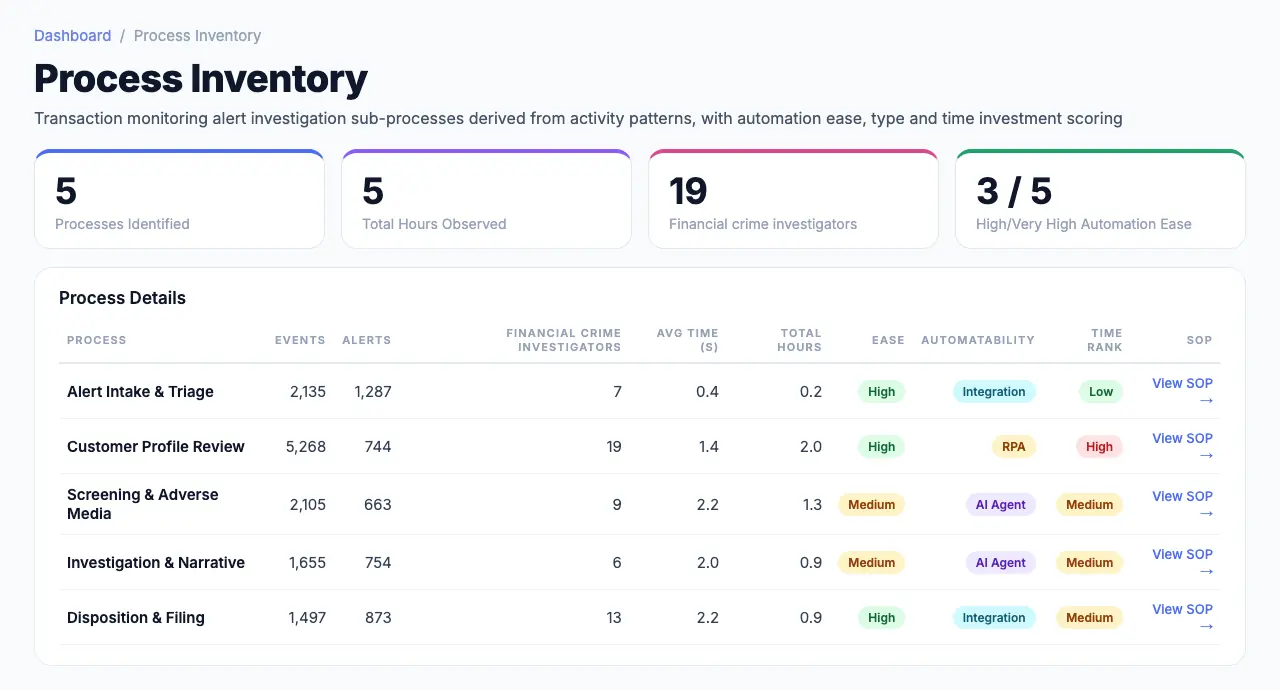
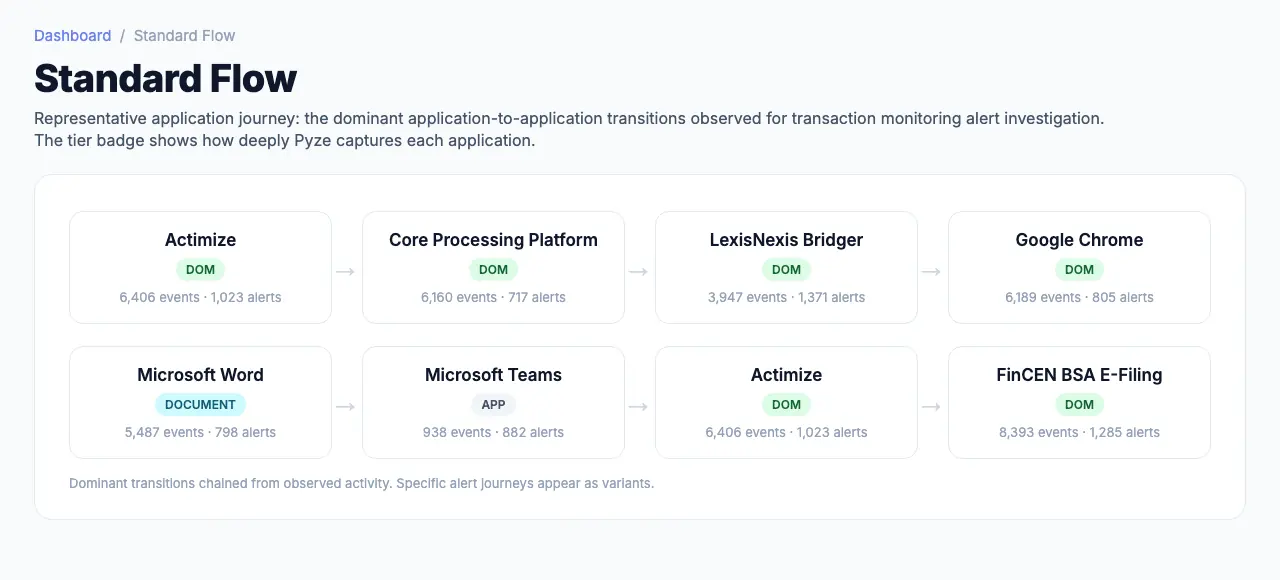
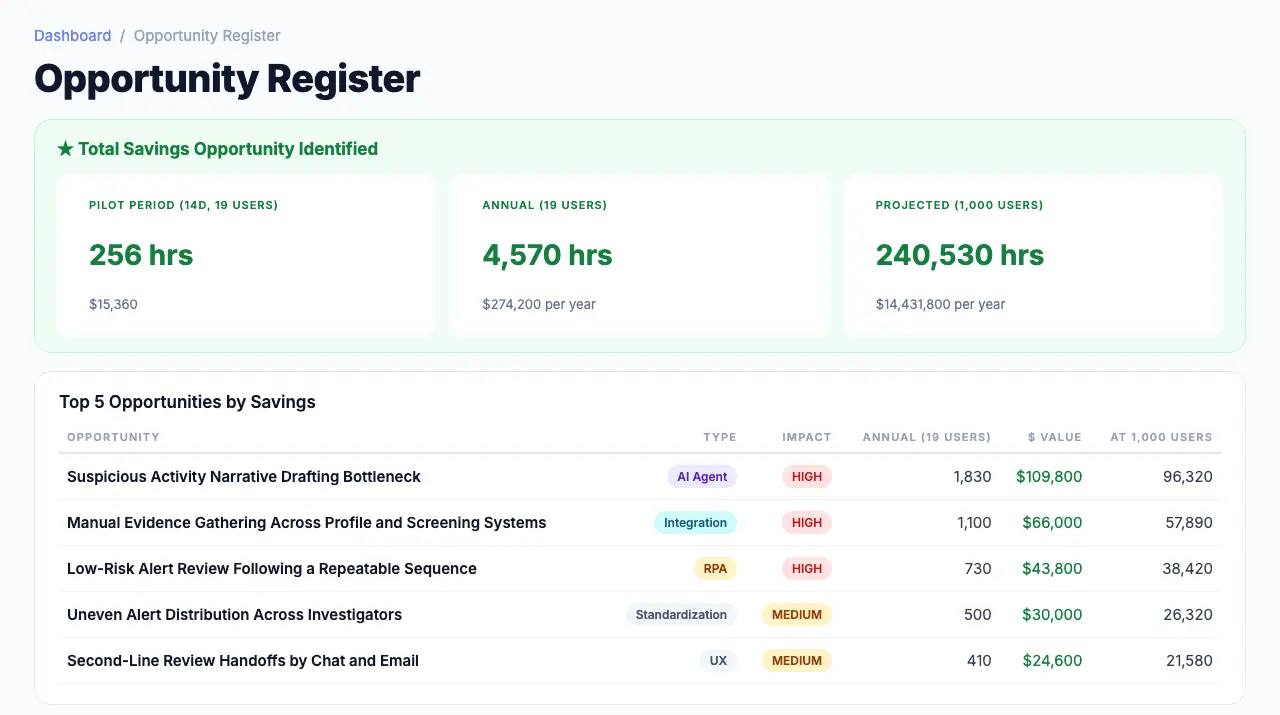
Example product views. Figures shown are illustrative.
What Pyze Measures
- Elapsed and hands-on time per investigation stage
- Application sequence from alert to disposition
- Review depth and rework by alert typology
- Queue balance and handoff delay between frontline and escalation reviewers
Typical Findings
- Investigators open the same customer profile in several systems to confirm identity and account history before reaching a disposition.
- Alerts that are closed without escalation tend to follow an identical screen sequence, which indicates a repeatable pattern.
- Narrative documentation is drafted in a word processor and pasted back into the case record, adding handoffs at the end of each investigation.
What the Opportunity Register Supports
- The opportunity register supports a business case for AI-assisted narrative preparation.
- The register identifies which alert typologies follow repeatable sequences suited to automated pre-review.
- Workload findings support rebalancing alert assignment between frontline and escalation teams.
Example Opportunities
- 1.Suspicious Activity Narrative Drafting Bottleneck AI Agent Agentify
- 2.Manual Evidence Gathering Across Profile and Screening Systems Integration Automate
- 3.Low-Risk Alert Review Following a Repeatable Sequence RPA Automate
- 4.Uneven Alert Distribution Across Investigators Standardization Rebalance
- 5.Second-Line Review Handoffs by Chat and Email UX Simplify
Roles and Titles
- Chief Compliance Officer
Chief Compliance Officer, Head of Compliance Operations, Head of Regulatory Compliance
- Head of Financial Crime
Chief AML Officer, MLRO, Head of Financial Crime Operations
- Head of Onboarding and KYC
Head of Client Onboarding, Head of KYC Operations, Director of Customer Due Diligence
KYC and Financial Crime in Other Industries
Other Fintech and Payments Functions
See This on Your Own Work
A measured baseline before anything changes, then a priced and owned list of what to do about the gaps.